
Treatment packages are mainly leveled based on the ranking of surgeons (according to the number of annual surgeries, years of experience, educational and experimental records, the rate of successful surgeries and the percentage of patients’ satisfaction) and the hospital/clinic where the surgery is performed.
As an example, level 1 surgeons are Iranian brand doctors who are famous inside and outside the country and are mainly observed by international patients on social networks. It should be noted that all the doctors and surgeons that cooperate with Nora Health Tour are board certified and work in prominent hospitals that are licensed to accept international patients and comply with the standards of Nora Health Tour medical team.
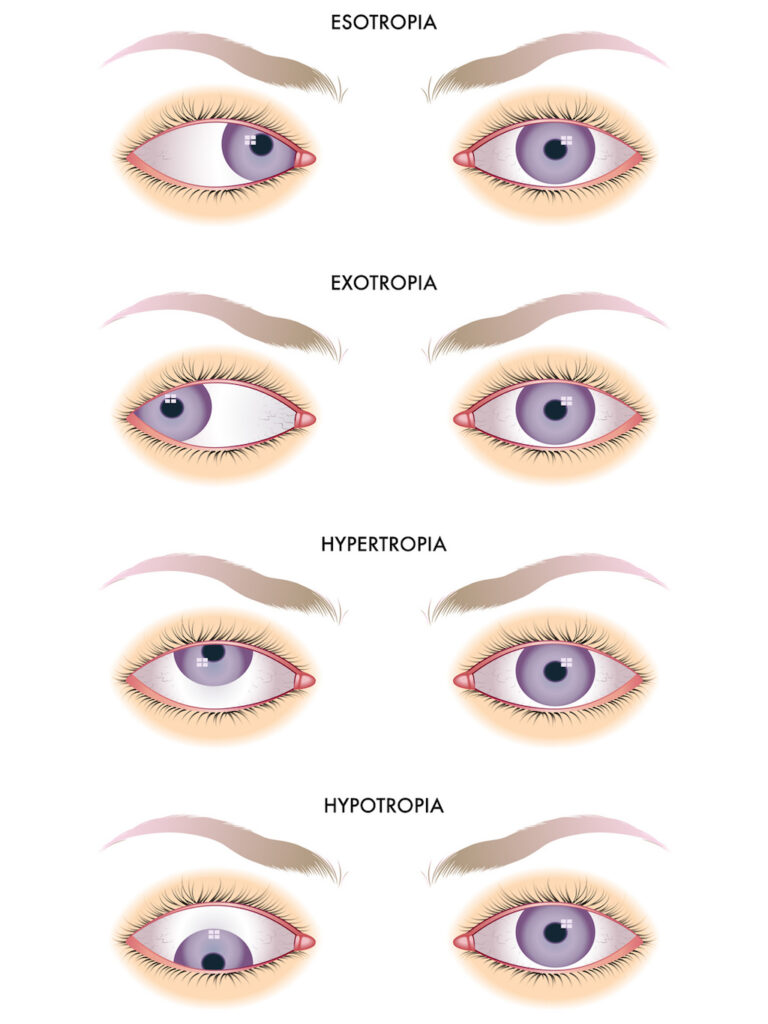
In strabismus (crossed eyes), the person has a problem with the natural deviation of the eyes and these two members are not able to function as a coordinated team and rotate in a different direction from each other. Therefore, any deviation of the eye from the normal level is called strabismus. Strabismus may be permanent or occur periodically and intermittently. Sometimes misalignment occurs in only one eye and sometimes in two eyes and it is the initial sign of strabismus as an ocular disorder in which the eyes deviate upwards, downwards, inwards or outwards.
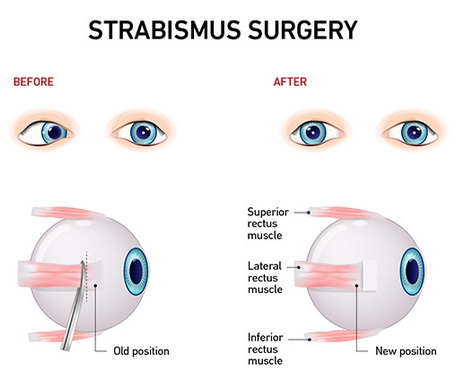
Each eye has six external muscles, which are responsible for the location and movements of the eye, which must be properly adjusted for normal vision, location, nerve control, and function of each of these muscles. It means in order for both eyes to focus on a specific sign, it is necessary for all the eye muscles to be in harmony with each other and with the muscles of the opposite eye. Deviation of the eye (Strabismus) occurs when the presence of a neurological or anatomical problem leads to a disorder in the function and control of the external muscles of the eye. This problem occurs in the muscles, nerve fibers, or vision centers of the brain that control binocular vision. Genetics also play an important role. If one or both parents have this problem, their child will be at greater risk.
When the alignment of the eyes is large and clear, it is called large-angle strabismus and the lesser deviation of strabismus is called the small angle. Typically, large-angle permanent strabismus does not cause symptoms such as eye fatigue or headaches because the brain does nothing to correct the aberrant eye and if it is left untreated, it can lead to lazy eye.
In milder cases, small-angle strabismus is more likely to cause the child annoying problems such as headaches and eye fatigue, inability to read, fatigue when reading, and unstable vision along with nervousness and if it is left untreated, it can cause severe laziness.
Adults with strabismus often have squint because the brain is able to receive or receive images from both eyes. While, in a young child, the brain learns to ignore the image of the deviated eye and accept only the image of the straight eye or the eye with better vision. This causes a loss of depth perception and binocular vision.
In this disease, while one eye is staring at the object, the other eye is looking at another point, and depending on the type of deviation of the eye, different states will occur:
Treatment Method of Strabismus and Deviation of the Eye
There is different treatment method for strabismus and deviation of the eye depends on cause, type, and severity of strabismus:
What can happen if strabismus is not treated
In most cases, strabismus surgery is the most effective way to treat permanent ocular aberration and success in strabismus surgery depends on many factors, such as the direction and extent of the deviation of the eye. In some cases, more than one surgery may be needed to treat strabismus. The surgeon can also dramatically repair the eyes of adults with long-term aberrations. However, in many cases, the deviation of the adult’s eye may cause the affected eye to misalign and a considerable amount of lazy eye may remain. This is why early treatment of strabismus is so important.

Strabismus or eye aberration’s surgery is usually performed as an outpatient surgery at a hospital or surgery center using general or local anesthesia. Anesthesia is required in children, but adult surgery with local anesthesia is also possible.
The eyeball never moves out of place during any surgery or aberration operation. Strabismus surgery is the creation of a small incision in the tissue that covers the eye (conjunctiva) to reach the eye muscles beneath the tissue. Surgery is then performed on the eye muscles to correct the parallel and deflection of the eyes by weakening or strengthening their function. Which muscles undergo eye surgery or aberration depends on the direction of eye rotation. The operation may need to be performed on one or both eyes. After strabismus surgery, you can return to your daily routine in a few days.
Nora Health Tour team usually arranges strabismus or eye aberration’s surgery done on an outpatient basis, under local anesthesia in day clinic and there is no need for hospitalization. Of course the surgery may be performed under general anesthesia, depending on the patient’s health condition and the surgeon’s diagnosis. Procedure Duration is between 30 minutes and two hours and the recovery lasts from 1 to 2 weeks.
Strabismus Surgery Post-operative Instructions
Strabismus surgery in Iran is more affordable than anywhere in the world In terms of costs, while; it is considerably lower than clinics in the UK, the US or neighboring countries in the region. One of the most important factors for choosing a good surgeon at strabismus in Iran is the doctor has done many strabismus surgeries. Whereas, a reliable medical tourism destination like Iran can remove all worries about qualifications of the surgeon and related services, a strabismus surgery cost in Iran is approximately $1,400 to $2,200. This cost mainly includes doctor visits, clinic, anesthesia, medications, post-op recovery, follow-up, etc. Depending on the doctor’s reputation and level of expertise, the complexity of the procedure, and clinic, the price may vary.
It should be noted that individual brochures based on the patient / client plan, including pre- and post-operative instructions, as well as the necessary information and processes for further follow-up are provided to you. During your stay in Iran, the translators of Nora Health Tour fully support you 24/7 and will happily help you to resolve any concerns or ambiguities that may arise for you.
Strabismus surgery is reported to be a safe and effective option for crossed eyes. It improves visual function.
Strabismus is far from merely cosmetic. It may create double vision or problems with depth perception in sufferers. Surgery is often recommended in children to help with normal visual development while adults may need surgery, rather than patches or blurring of one eye, to correct an ongoing problem.
The experience of pain seems to vary widely after strabismus surgery. The typical experience, especially for first-time operations, is moderate pain that responds to Tylenol or Motrin. The duration of pain varies from a few hours to several days.
Each person is different regarding recovery time. Some may want to take 1-2 weeks off following the surgery while others are ready to return to their regular schedule a few days after surgery. Driving is okay when you feel that it is safe to do so. It’s okay to fly any time after surgery.
LASIK works best in conjunction with other amblyopia therapies that help your brain start to recognize the improved vision in your lazy eye. If amblyopia is caused by misaligned/crossed eyes or obstructed vision, however, laser eye surgery is unlikely to improve the condition.
Recent research from the National Eye Institute (NEI) shows that a lazy eye can be successfully treated at least up to age 17. Lazy eye can now be effectively treated in children, teenagers and even adults.
Strabismus surgery can be performed in children as young as four months of age and is an important option for older children and adults as well. It’s better to perform surgery as early as possible, because the brain circuits for binocular vision (using the two eyes together) are most adaptable at a young age.