Hearing loss is a prevalent sensory impairment that can significantly impact an individual’s quality of life, communication abilities, and social interactions. While traditional hearing aids offer relief for many individuals with mild to moderate hearing loss, those with severe to profound hearing loss may require alternative solutions to restore their auditory function. In such cases, cochlear implants have emerged as a groundbreaking technology that has revolutionized the field of auditory rehabilitation.
Cochlear implants are sophisticated electronic devices designed to bypass damaged portions of the inner ear and directly stimulate the auditory nerve, providing a sense of hearing to individuals with severe hearing loss who do not benefit from conventional hearing aids. Unlike hearing aids, which amplify sound, cochlear implants work by converting sound signals into electrical impulses that the brain can interpret, allowing recipients to perceive speech, environmental sounds, and other auditory cues.
In this article, we explore the mechanics of cochlear implants, delving into the intricate processes by which these devices restore hearing and enhance the auditory experience for individuals with profound hearing loss. From the anatomy of the ear to the placement of electrode arrays and the signal processing mechanisms involved, we provide a comprehensive overview of how cochlear implants function to improve communication abilities and quality of life for recipients.
Anatomy of the Ear:
The ear is a complex and intricately structured organ responsible for the sense of hearing and balance. Understanding the anatomy of the ear is essential for comprehending how cochlear implants work to restore hearing in individuals with severe to profound hearing loss.
The ear can be divided into three main parts: the outer ear, middle ear, and inner ear.
- Outer Ear: The outer ear consists of the pinna (auricle) and the ear canal (external auditory meatus). The pinna serves to collect sound waves from the environment and funnel them into the ear canal. The ear canal is a narrow, tube-like structure lined with skin and earwax, which helps protect the ear and maintain its cleanliness.
- Middle Ear: The middle ear is an air-filled space located behind the eardrum (tympanic membrane). It contains three small bones known as the ossicles: the malleus (hammer), incus (anvil), and stapes (stirrup). These ossicles transmit sound vibrations from the eardrum to the inner ear. The middle ear is also connected to the back of the throat by the Eustachian tube, which helps equalize air pressure and drain fluids from the middle ear.
- Inner Ear: The inner ear is a complex structure housed within the temporal bone of the skull. It consists of two main parts: the cochlea and the vestibular system.
- Cochlea: The cochlea is a spiral-shaped, fluid-filled organ responsible for converting sound vibrations into electrical signals that the brain can interpret. It contains thousands of tiny hair cells (cilia) that are responsible for detecting sound waves and transmitting auditory information to the brain via the auditory nerve.
- Vestibular System: The vestibular system comprises the semicircular canals and otolithic organs, which are responsible for maintaining balance and spatial orientation. These structures detect changes in head position and movement and transmit information to the brain to coordinate balance and coordination.
Understanding the intricate anatomy of the ear provides the foundation for comprehending how cochlear implants bypass damaged portions of the inner ear to stimulate the auditory nerve directly. By bypassing damaged hair cells in the cochlea, cochlear implants enable individuals with severe hearing loss to perceive sound and regain their sense of hearing, improving their communication abilities and overall quality of life.
How Cochlear Implants Work:
Cochlear implants are innovative devices designed to provide a sense of hearing to individuals with severe to profound hearing loss who do not benefit from traditional hearing aids. Unlike hearing aids, which amplify sound, cochlear implants work by bypassing damaged portions of the inner ear and directly stimulating the auditory nerve, allowing recipients to perceive sound signals and understand speech.
The functionality of cochlear implants can be understood through the following steps:
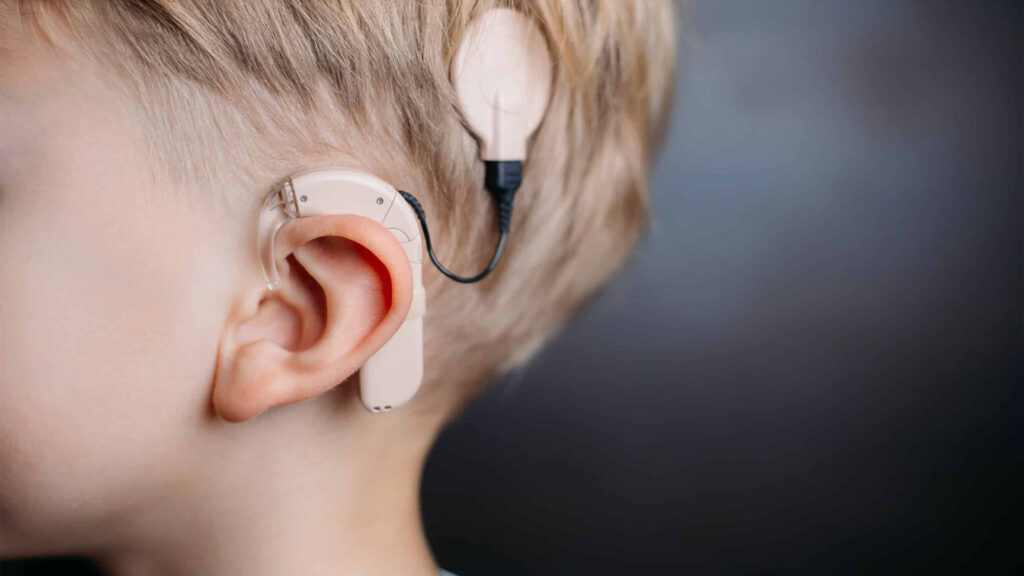
- Sound Reception: The process begins with the external processor of the cochlear implant capturing sound signals from the environment. The external processor is typically worn behind the ear and contains a microphone that picks up sounds from the surrounding environment.
- Sound Processing: Once the sound signals are captured, the external processor converts them into digital information using advanced signal processing algorithms. These algorithms analyze the incoming sound signals, filter out background noise, and enhance speech patterns to optimize speech understanding for the recipient.
- Signal Transmission: The processed digital information is then transmitted wirelessly to the internal implant component, which is surgically placed under the skin behind the ear. The internal implant contains a receiver-stimulator that receives the digital signals from the external processor and converts them into electrical impulses.
- Electrode Array Placement: Inside the cochlea, the internal implant contains a thin, flexible electrode array with multiple electrodes. During surgery, the electrode array is inserted into the cochlea, where it comes into contact with the remaining auditory nerve fibers. Each electrode corresponds to a specific frequency range of sound, allowing the brain to perceive a wide range of auditory stimuli.
- Electrical Stimulation: Once in place, the electrode array delivers electrical impulses directly to the auditory nerve fibers within the cochlea. These electrical impulses bypass the damaged hair cells in the cochlea and stimulate the auditory nerve fibers directly. The electrical stimulation mimics the natural patterns of neural activity produced by healthy hair cells, providing the brain with the information it needs to perceive sound.
- Perception of Sound: As a result of the electrical stimulation provided by the cochlear implant, the recipient’s brain is able to interpret the electrical signals as sound. Over time, recipients undergo auditory rehabilitation and training to adapt to the new sensory input provided by the cochlear implant, improving their ability to interpret and understand speech.
By bypassing damaged portions of the inner ear and directly stimulating the auditory nerve, cochlear implants enable individuals with severe hearing loss to perceive sound and regain their sense of hearing, enhancing their communication abilities and overall quality of life.
Signal Processing and Perception:
Signal processing and perception play crucial roles in the functionality of cochlear implants, optimizing speech understanding and sound quality for recipients. After capturing sound signals from the environment and converting them into digital information, cochlear implants employ sophisticated signal processing algorithms to analyze, enhance, and deliver the auditory stimuli to the recipient’s brain. This process involves several key steps:
- Speech Processing: The cochlear implant’s signal processing algorithms focus on isolating speech signals from background noise and enhancing speech patterns to improve speech understanding for the recipient. Advanced algorithms can differentiate between speech and non-speech sounds, prioritize speech signals, and suppress unwanted noise, thereby enhancing the clarity and intelligibility of speech for the recipient.
- Frequency Analysis: Sound signals are composed of different frequencies that correspond to different pitches or tones. Cochlear implants utilize frequency analysis algorithms to dissect incoming sound signals into their component frequencies and allocate them to the appropriate electrodes along the electrode array. By matching each frequency to its corresponding electrode, cochlear implants ensure that the recipient receives a rich and accurate representation of the auditory stimulus, enabling them to perceive a wide range of sounds and speech cues.
- Dynamic Range Compression: Cochlear implants employ dynamic range compression techniques to ensure that soft sounds are audible and loud sounds are comfortable for the recipient. This process involves compressing the dynamic range of incoming sound signals to fit within the limited range of electrical stimulation provided by the implant. By adjusting the amplitude of the electrical impulses in real time, cochlear implants optimize the perception of soft and loud sounds, improving speech understanding and sound quality for the recipient.
- Temporal Processing: In addition to analyzing frequency information, cochlear implants also process temporal cues, such as the timing and duration of sound signals. Temporal processing algorithms enhance the temporal resolution of the implant, allowing the recipient to detect rapid changes in speech patterns, distinguish between phonemes, and perceive subtle nuances in speech rhythm and timing.
- Perception and Adaptation: As a result of the signal processing algorithms employed by cochlear implants, recipients perceive electrical impulses as sound sensations in their auditory cortex. Over time, recipients undergo auditory rehabilitation and training to adapt to the new sensory input provided by the implant, improving their ability to interpret and understand speech. With continued use and practice, recipients can achieve significant improvements in speech understanding, communication abilities, and overall quality of life.
Overall, signal processing and perception are integral components of cochlear implant technology, enabling recipients to perceive sound, understand speech, and engage with the auditory world around them. By harnessing the power of advanced signal processing algorithms, cochlear implants optimize the auditory experience for recipients, providing them with a newfound sense of hearing and enhancing their communication abilities in everyday life.
Conclusion:
Cochlear implants represent a remarkable advancement in medical technology, offering individuals with severe to profound hearing loss the opportunity to regain their sense of hearing and significantly improve their quality of life. By bypassing damaged portions of the inner ear and directly stimulating the auditory nerve, cochlear implants enable recipients to perceive sound, understand speech, and engage with the auditory world around them.
Throughout this article, we have explored the intricate mechanics of cochlear implants, from the anatomy of the ear to the signal processing algorithms employed by the device. Cochlear implants work by capturing sound signals from the environment, converting them into electrical impulses, and delivering them to the auditory nerve, allowing recipients to perceive a wide range of sounds and speech cues.
Signal processing plays a crucial role in optimizing speech understanding and sound quality for cochlear implant recipients, enhancing the clarity, intelligibility, and comfort of auditory stimuli. By employing sophisticated algorithms to analyze, enhance, and deliver sound signals to the brain, cochlear implants enable recipients to interpret and understand speech with remarkable accuracy and precision.